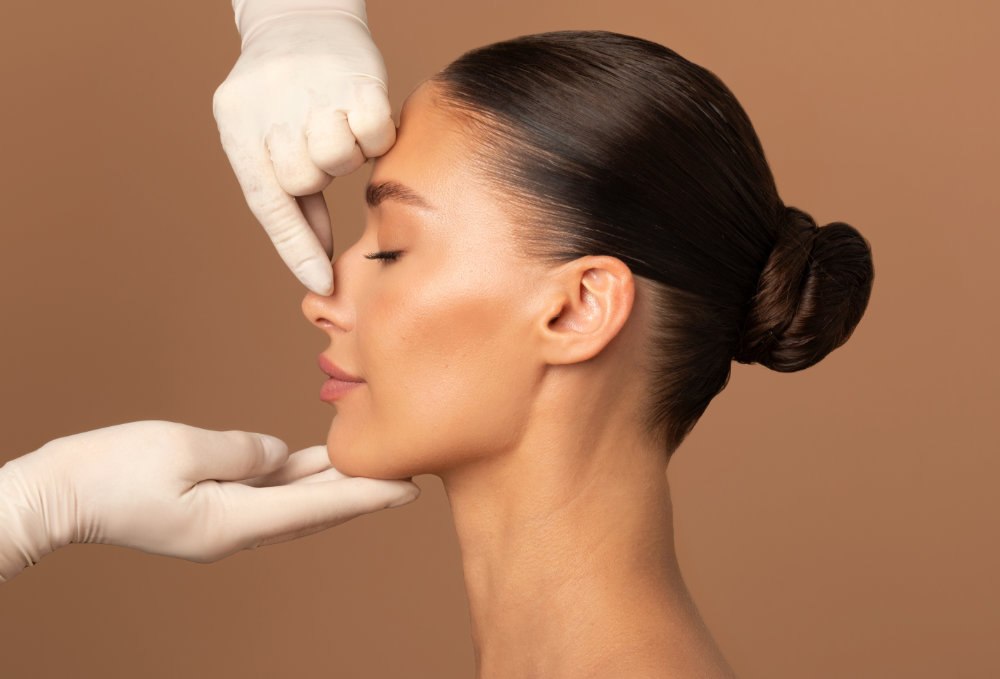
At Facial Cosmetic Surgery Associates, we perform rhinoplasty to address both functional and cosmetic nasal concerns. This surgery can help patients who experience breathing difficulties because of structural issues, but it is also commonly requested to improve the appearance of the nose. This surgery is versatile, and we use different methods to treat everything from a prominent dorsal hump to an overlarge tip. With the right surgical technique, this procedure can help improve both appearance and nasal function for long-term results.
The Aesthetic Goals of Rhinoplasty
The goal of rhinoplasty is to create balance among your facial features while refining the nose so it complements rather than dominates the face. Small adjustments to the bridge, tip, or nostrils can make a big difference. The final results depend on factors like bone structure, skin thickness, and the specific surgical technique used. Every nose has its own anatomy and proportions, which means every step needs to be planned to achieve subtle, lasting refinement.
Common Cosmetic Concerns That Rhinoplasty Can Address
Dorsal Hump or Nasal Bump
A raised area along the bridge of the nose develops from excess bone or cartilage. Some people are born with this feature, while others develop it after an injury. During nose reshaping, we carefully reduce or file down excess bone and cartilage, then refine the surrounding nasal structures to create a smoother line from the bridge to the tip. When additional support is needed, we use structural grafting to strengthen and contour the upper part of the nose.
Wide or Bulbous Nasal Tip
A rounded or bulbous nasal tip often results from thick skin, large lower cartilage, or both. To correct this, we refine or reshape the tip cartilage and adjust internal support structures. For thicker skin types, we plan adjustments carefully to prevent overcorrection since skin density affects how the area will look once the nose heals.
Crooked or Asymmetric Nose
Deviation of the nasal bones or cartilage can make the nose look uneven from the front. Structural asymmetry may come from genetics, trauma, or a previous surgery that was not successful. To correct this, we reposition the underlying bone and cartilage, and when needed, realign the septum to improve both form and breathing.
Drooping or Over-Projected Tip
A nasal tip that points downward or extends too far outward can draw attention away from other facial features. During nasal surgery, we reshape, lift, or reposition the cartilage at the tip to create a more balanced angle between the nose and upper lip. We also reinforce the internal support structures to help maintain the new position and prevent future drooping as tissues settle.
Wide Nasal Bridge or Flared Nostrils
When the bridge appears broad or the nostrils flare outward, we can refine the width. Our approach may include narrowing the nasal bones or reducing soft tissue along the nostril base. We make these changes conservatively to preserve breathing function while achieving a proportionate bridge and nostril width.
Secondary or Revision Concerns
Some patients seek revision rhinoplasty when they are unhappy with the results of a previous surgery or when complications have affected breathing or appearance. Revision may be needed to correct persistent asymmetry, irregularities along the bridge, or issues with nasal tip projection or support.
Because scar tissue and structural changes can make secondary surgery more complex, we take time to evaluate internal anatomy and determine the safest way to restore both function and appearance. Full healing from the original procedure is essential before considering another operation, since residual swelling or tissue stiffness can interfere with precise correction. We also review each patient’s nasal structure, cartilage availability, and breathing patterns to design a realistic and effective surgical plan for revision.
Types of Rhinoplasty
There are several methods of nose surgery, and each technique depends on the patient’s anatomy and goals. In a closed rhinoplasty, all incisions are made inside the nostrils, which avoids external scarring and is often used for adjustments involving the nasal bridge or tip. An open approach involves a small incision across the columella, giving us more direct visibility and precision when modifying complex structures.
What a Rhinoplasty Cannot Do
Although rhinoplasty can change nasal shape and improve function, it cannot completely alter facial identity or create a nose identical to someone else’s. The results depend on natural anatomy, including bone structure, cartilage strength, and skin thickness. It also cannot stop future aging or guarantee symmetry under all lighting or angles.
What to Expect From Your Recovery and Final Results
Healing after rhinoplasty takes time, as swelling gradually decreases and the nasal tissues settle into their new form. Most patients return to light daily activities within about one to two weeks, though visible swelling can persist for several weeks, depending on the extent of correction. We will monitor your progress through scheduled follow-up visits to make sure you are healing properly and that your nose is stable. You will see the final shape as swelling resolves. Make sure to adhere to post-care instructions and protect your nose from injury as it heals.
Non-Surgical Rhinoplasty
If you want subtle nasal refinement without surgery, non-surgical rhinoplasty can be an option. This treatment uses dermal fillers to temporarily correct mild irregularities such as small bumps, depressions, or minor asymmetry. The results appear immediately and can last several months. Because it does not alter bone or cartilage, the changes are limited but can provide a preview of how surgical correction might look. We recommend an in-office evaluation to determine if injectable contouring is right for you.
Find Out More About Rhinoplasty in Sacramento, CA
At Facial Cosmetic Surgery Associates, we approach rhinoplasty with a focus on both structural function and facial balance. Every surgical plan begins with a detailed understanding of anatomy, breathing patterns, and aesthetic goals to create results that blend with the rest of your features. We serve patients from Sacramento, CA, and surrounding areas, including Tahoe, Modesto, the Bay Area, and areas all the way up to the Oregon border. To learn more about your options or schedule a consultation, call (916) 480-9080 or contact us using our website.